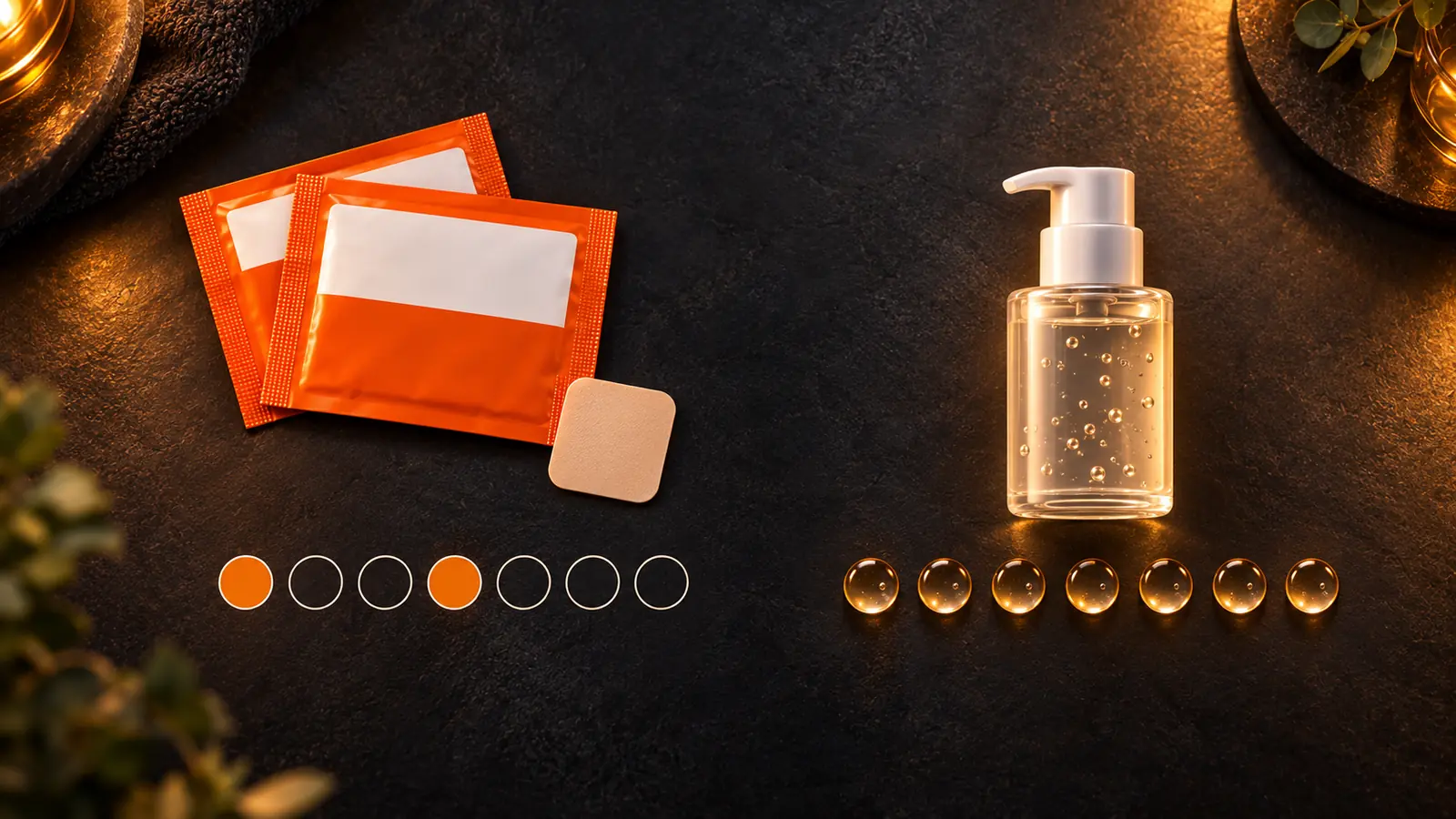
Menopause hormone therapy should fit into real life—not turn into another daily chore. Both estradiol patches and gels deliver estrogen through the skin, but the routine is different. Estradot 25 is changed twice a week, while estradiol gel is generally applied every day.
For women who want fewer application steps, no daily drying time and a routine that is easy to schedule, the patch can be the more convenient option. That does not make it universally “better”: the right form of HRT still depends on symptoms, medical history, skin tolerance and personal preference.
The quick answer
Estradot may be easier to live with because one patch provides continuous estradiol delivery and is replaced every three to four days. Gel usually needs daily application, time to dry, hand-washing and care around washing or skin-to-skin contact immediately afterwards.
If remembering a daily dose is difficult, or you simply want less handling, a twice-weekly patch is an appealing routine. If adhesive irritates your skin or patches do not stay in place, gel may be the better fit.
What is Estradot 25?
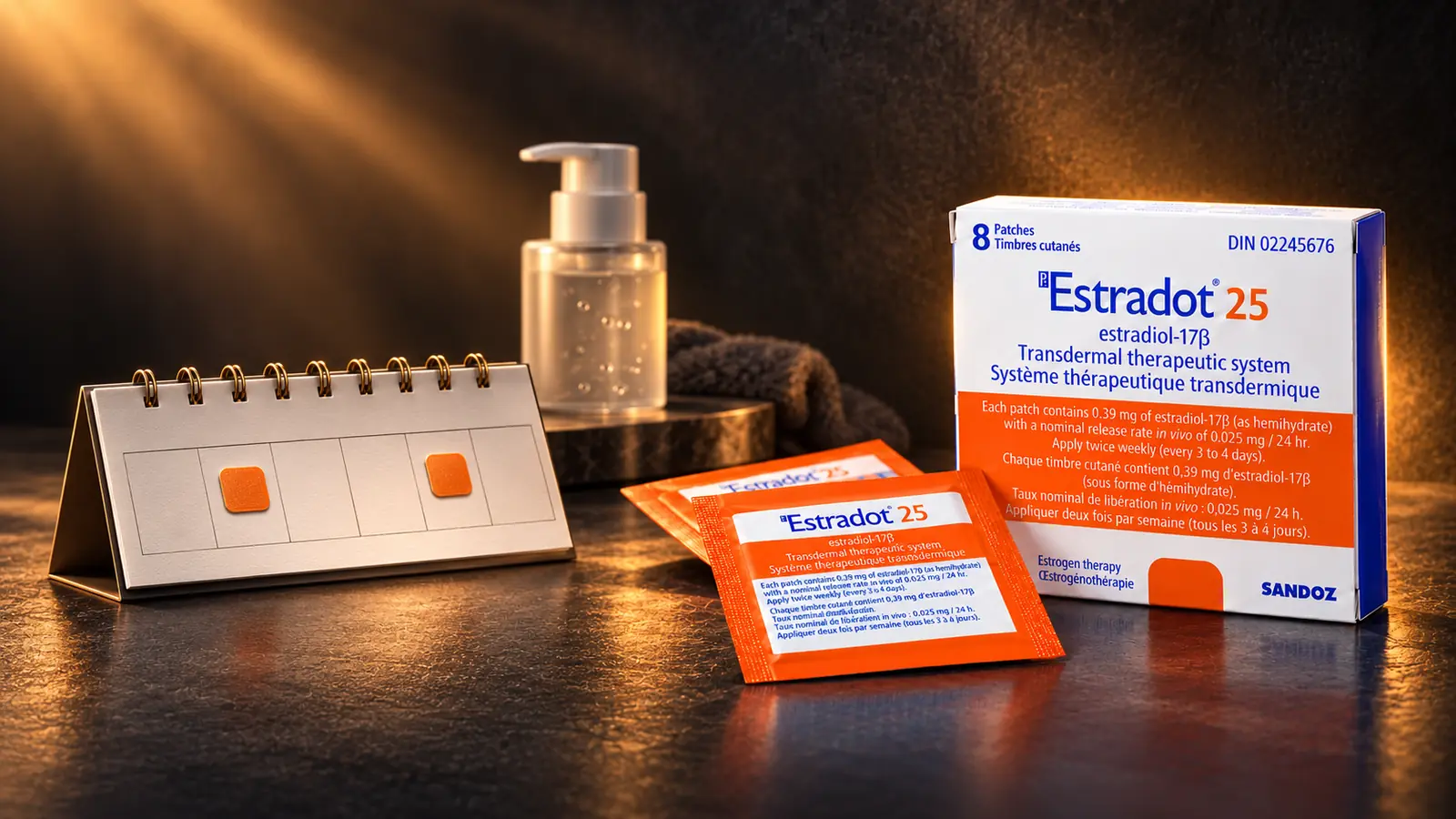
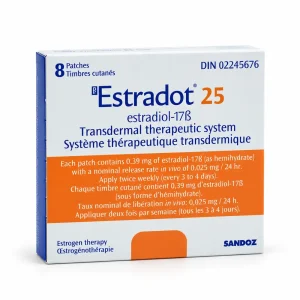
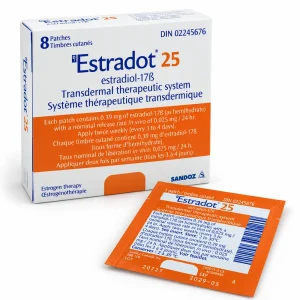
Estradot 25 is a transdermal hormone replacement therapy patch containing estradiol-17β. Each patch releases approximately 25 micrograms of estradiol over 24 hours. A box contains eight individually sealed patches—four weeks of treatment when the patch is changed twice weekly.
The patch is designed to provide a steady supply of estradiol through the skin. Estradiol HRT may be prescribed for menopausal symptoms such as hot flushes, night sweats, sleep disturbance and urogenital symptoms. The dose and treatment plan must be selected by a qualified clinician.

Patch vs gel: what changes in the daily routine?
| Routine | Estradot patch | Estradiol gel |
|---|---|---|
| How often? | Replace every 3–4 days (twice weekly) | Apply once every day |
| Application | Apply to clean, dry skin below the waist and press firmly | Spread over the recommended skin area |
| Immediately after | Check that the edges are secure | Allow to dry and wash hands |
| Water | Usually remains in place during bathing or swimming | Do not wash the area for at least one hour |
| Common practical issue | Adhesive irritation or the patch lifting | Daily handling, drying time and transfer precautions |
Why many women may find the patch more convenient
1. Two planned changes instead of seven daily applications
A patch schedule can be linked to two fixed days—for example Monday and Thursday. That reduces the number of times you need to remember HRT from seven applications per week to two patch changes.
2. No daily drying window
Gel is simple, but it still needs a short routine: apply it to the advised area, let it dry, wash your hands and avoid washing the application site for at least an hour. A securely attached patch stays in place while you get on with the day.
3. Less handling and fewer transfer concerns
Once the patch is applied, the medicine is contained under the adhesive system. Gel requires care until the application area is dry and covered, particularly before close skin contact with another person. Following the exact instructions for either product remains important.
4. A discreet, travel-friendly routine
Individually sealed patches are compact and do not involve a pump or liquid. For travel, work shifts or busy weeks, carrying the next patch and knowing the two change days can feel refreshingly simple.
5. Continuous delivery without a daily ritual
Estradot is designed to release estradiol continuously between changes. Gel also delivers estradiol through the skin, but it depends on consistent daily application. The best system is the one you can use correctly and consistently.
When gel may still be the better choice
Convenience is personal. Estradiol gel may suit women who develop adhesive reactions, dislike wearing a visible patch, sweat heavily, swim frequently or repeatedly find that a patch lifts. Gel formulations can also offer different dosing options depending on the prescribed product.
There is no single winner for everyone. Patches and gels are both transdermal forms of estradiol; the decision should be based on clinical suitability as well as lifestyle.
How to use Estradot correctly
- Apply the patch to clean, dry, intact skin on the lower abdomen or buttocks.
- Do not apply it to the breasts, waistline or irritated skin.
- Press the patch firmly with the palm for about 10 seconds, especially around the edges.
- Change it every three to four days and rotate the application site.
- If a patch falls off, follow the product leaflet or your clinician’s instructions.
Important safety points
Estradot is prescription hormone therapy. Use the lowest effective dose for the shortest appropriate duration and attend regular clinical reviews. Women who still have a uterus generally need a progestogen alongside systemic estrogen to protect the endometrium.
HRT is not suitable for everyone. A clinician should review any history of breast or estrogen-dependent cancer, unexplained vaginal bleeding, blood clots, stroke, heart attack, liver disease, pregnancy or allergy to the product. Seek urgent medical help for symptoms such as sudden chest pain, breathlessness, one-sided leg swelling, severe headache, weakness or vision changes.
Do not switch product, route or dose without medical guidance. Read the current patient leaflet supplied with your medicine.
Explore both estradiol options
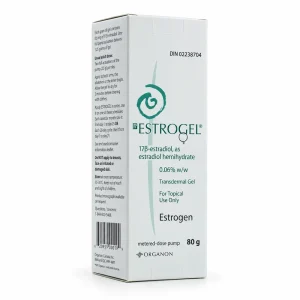
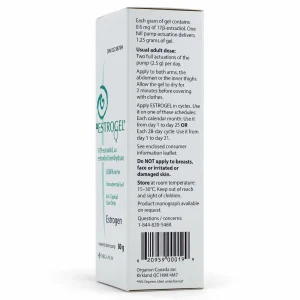
The most convenient format depends on your prescribed treatment and daily routine. Review both product pages before discussing the most suitable option with a qualified clinician.
-
Original price was: $120.$100Current price is: $100.
-
Original price was: $160.$140Current price is: $140.
Frequently asked questions
How often do you change an Estradot 25 patch?
Estradot is normally changed twice a week—every three to four days—on the same two days each week, unless your prescriber gives different instructions.
Can you shower or swim with an Estradot patch?
A correctly applied patch should usually stay on during showering, bathing or swimming. Check that the edges remain attached afterwards.
Is an estradiol patch safer than gel?
A patch is not automatically safer than gel. Both deliver estradiol through the skin. Individual risks depend on your health, dose and treatment plan, so discuss the choice with a clinician.
Sources
- MG — Estradot 25 product page
- MG — EstroGel product page
- Health Canada — Estradot monograph
- NHS — How to use oestrogen patches and gel
- NHS — About oestrogen patches and gel
Medical content should receive the site’s usual final compliance review before publication. Product leaflets and prescribing information may be updated.